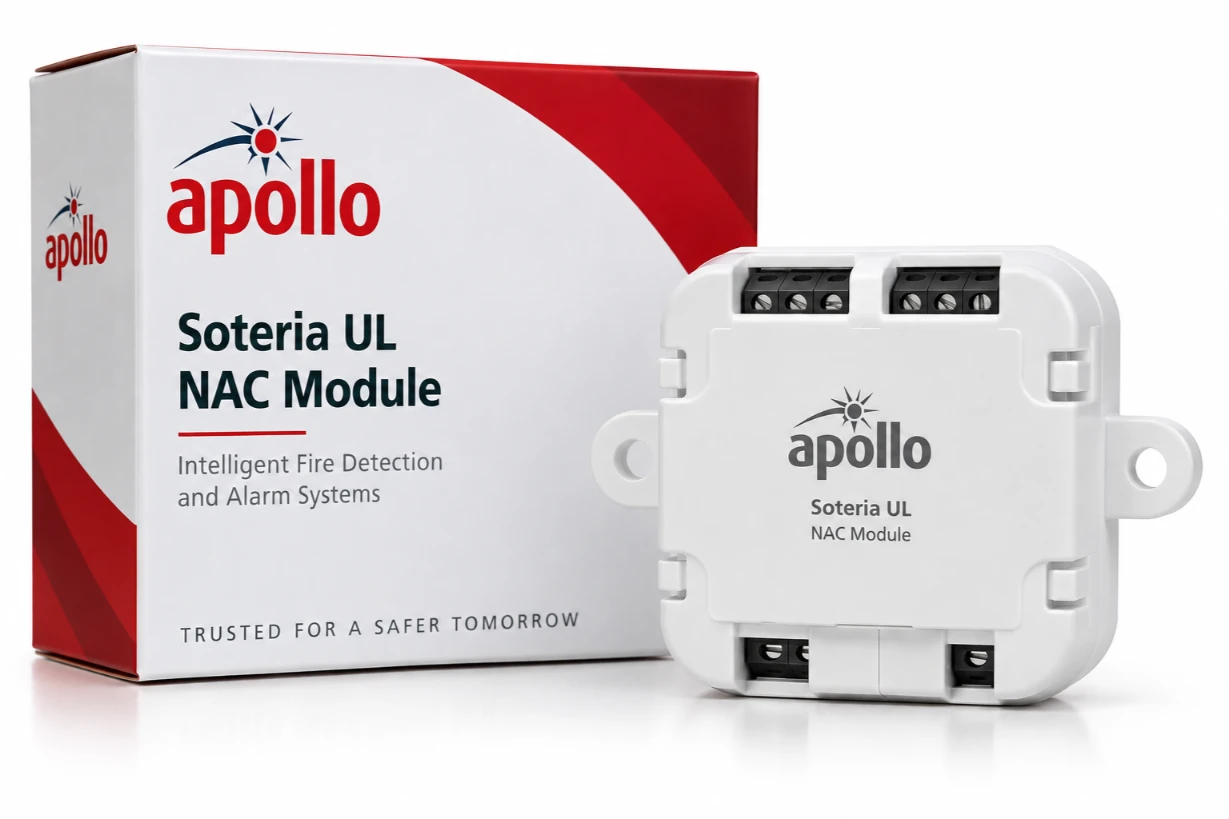
The Soteria UL NAC Module from Apollo is an intelligent addressable module designed to control Notification Appliance Circuits (NAC) within fire alarm systems. The module enables the connection and operation of notification appliances such as horns, bells, and visual strobes through the addressable fire alarm system while allowing the circuit status to be monitored.
The module supports Class A and Class B circuits and can provide a regulated 24 VDC output with a maximum current of 2 A for compatible notification appliances. It communicates through the system’s SLC loop, allowing the module to be individually identified, monitored, and controlled by the fire alarm control panel. It is suitable for commercial buildings, offices, hotels, public facilities, and industrial projects requiring reliable and flexible control of fire alarm notification appliances.
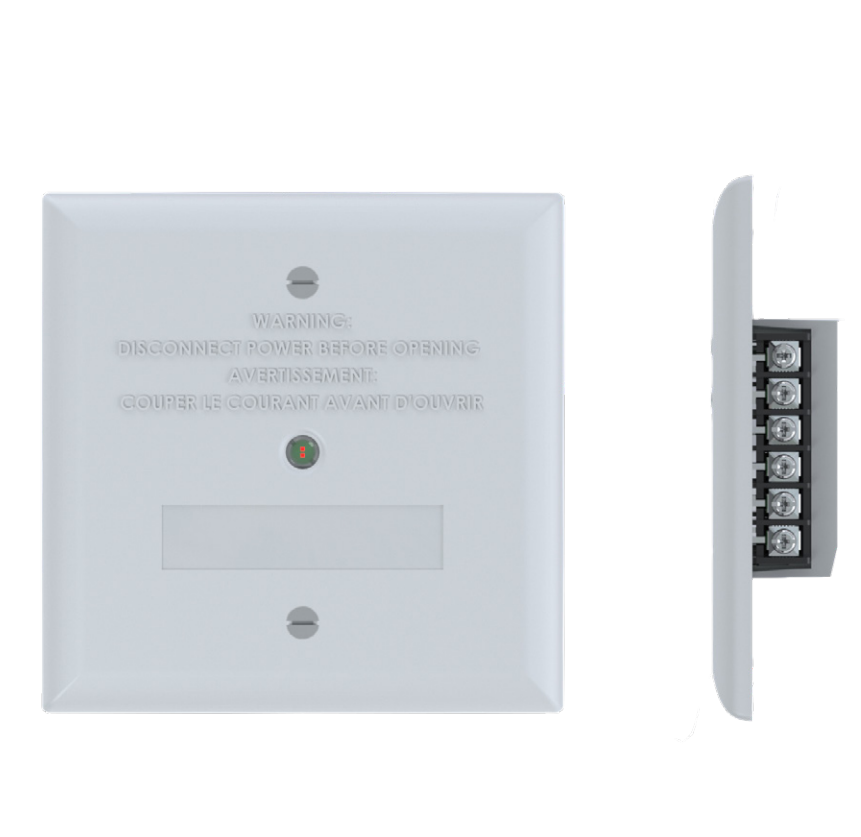
The Soteria UL NAC Module from Apollo is an intelligent addressable module designed to provide reliable control and supervision of Notification Appliance Circuits (NAC) within an addressable fire alarm system. It allows compatible audible and visual notification appliances to be integrated into the system and controlled through the fire alarm control panel.
The module communicates with the fire alarm system through the Signaling Line Circuit (SLC), operating within an SLC voltage range of 17–28 VDC. As an addressable device, it can be individually identified by the control panel, providing centralized monitoring and control as part of the overall fire detection and alarm network.
The Soteria UL NAC Module supports both Class A and Class B notification appliance circuit configurations, providing flexibility when designing the fire alarm system according to the requirements of the protected facility. This makes it suitable for different system layouts and notification strategies.
For notification appliances, the module can provide a regulated 24 VDC output with a maximum current of 2 A. This output can be used with compatible fire alarm notification devices such as horns, bells, strobes, and other audible or visual appliances, depending on the requirements and configuration of the system.
In addition to controlling notification appliances, the module provides circuit supervision, allowing the fire alarm system to monitor the condition of the connected notification circuit. This helps identify faults that could affect the operation of alarm notification devices and supports more effective maintenance and system management.
The addressable design also allows the NAC Module to operate as part of a coordinated Apollo fire alarm system alongside smoke and heat detectors, manual call points, monitor modules, control modules, annunciators, and fire alarm control panels. This provides greater flexibility when creating a complete fire detection and notification solution.
Its compact construction supports convenient installation within different fire alarm system configurations, while the addressable communication capability allows system designers to position notification control where it is required throughout the building.
The Soteria UL NAC Module is suitable for a wide variety of applications, including commercial buildings, offices, hotels, educational and institutional facilities, public buildings, and industrial projects where reliable control and supervision of fire alarm notification appliances are required.
With its combination of addressable SLC communication, Class A and Class B circuit support, regulated 24 VDC output up to 2 A, notification circuit supervision, and integration with compatible Apollo fire alarm systems, the Soteria UL NAC Module provides a practical and flexible solution for controlling fire alarm notification appliances within modern life-safety systems.
Nile Shield is ready to help you choose the right system and protect your facility to certified codes.